

In the present food industry around the world, individuals are eating products produced in various nations and cultures. Due to this heterogeneity, it has also become more challenging to have Muslim consumers clearly know whether a food product is halal or not. Most processed foods have complicated ingredients, additives and processing techniques, which are not clearly stated on their packaging labels.
This brings about confusion in adhering to Islamic diet. This has led to a lot of individuals seeking viable means of finding how to tell whether food is halal in their day to day lives. The knowledge of halal food does not just focus on the avoidance of the forbidden foods, but also involves hygiene, ethical sourcing, and proper food handling based on Islamic guidelines.
What Does Halal Food Mean in Simple Terms?
Halal is a term that is used to refer to anything that is allowed by the Islamic law. In relation to food, it implies that the food must be permitted and that it must comply with certain religious restrictions. To be considered to be halaal, food should not be pork or contain pork products, alcoholic, or contaminated with any poisonous or impure substances.
With meat, the animal should be killed in the Islamic way, both in terms of ethical treatment and hygiene. Halal does not just cover meat products, but also extends to beverages, processed foods, and even food additives in the manufacturing process.
Why It Can Be Difficult to Determine If Food Is Halal
In the contemporary food production systems, it is not always easy to determine what food is halal. Most of the ingredients that are processed, modified, or sourced in various ways, and it is hard to know where they come from. Moreover, the labels of food are usually scientific or technical terms that are not readily familiar.
There is also the possibility of cross-contamination of some products in the same facilities that are used to manufacture them and this makes the verification process more complex. Due to these issues, consumers usually face a dilemma of whether a product is halal or not. how to determine if food is halal
Common Hidden Non Halal Ingredients in Food Products
Although it is believed that meat products are the only foods that could be non-halal, the truth is that a number of hidden ingredients could render a product to be doubtful as well. Examples of some common ones are gelatin, commonly obtained by using the bones or skin of an animal, and the enzymes used in the production of cheese.
Some processed foods also contain alcohol flavouring agents and other additives such as L-cysteine which might be of animal origin. Such ingredients are not necessarily well labeled and therefore, it is important that consumers know what they are taking.
How to Read Food Labels to Check Halal Status
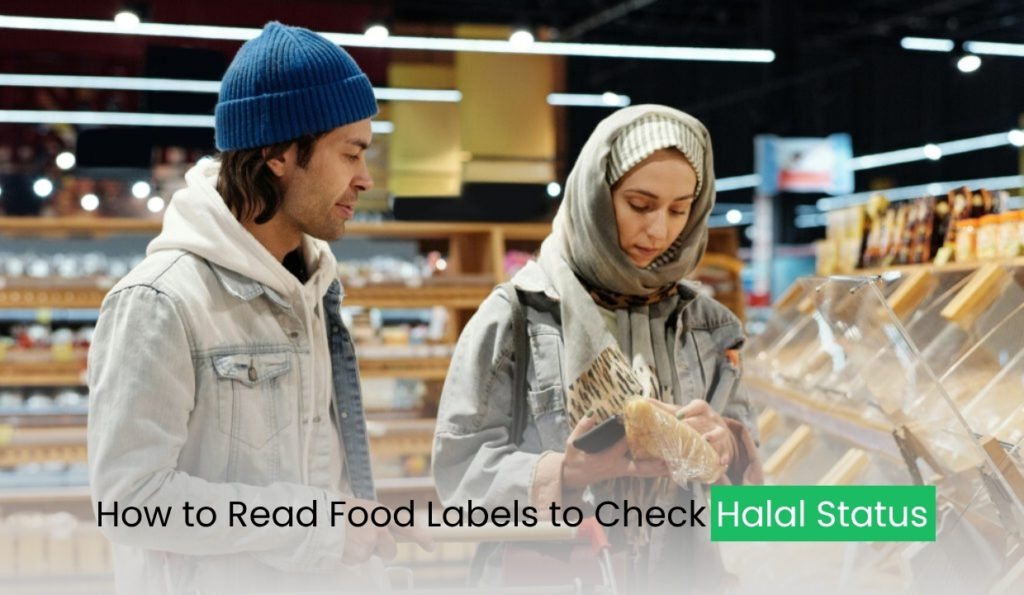
One of the most crucial measures in identifying the halal nature of a product is reading the label of the food. The consumers should never ignore the ingredient list and need to investigate the contents. One should also look at signs of halal certification by reputable authorities, country of origin and production information. As much as labels can be helpful, they do not necessarily suffice on their own to ensure halal status.
Understanding Halal Certification Symbols Worldwide
Halal certification signs are important in assisting consumers to recognize both authorizing food products. These marks are issued by various halal authorities in the world, all charged with the responsibility of ensuring that products are in line with Islamic dietary requirements. Not every certification logo is as credible, though.
It is important for consumers to be aware of trusted certification bodies and understand that verification may vary depending on the region and authority involved.
Step-by-Step Methods to Determine If Food Is Halal
Consumers can use a number of steps to find out whether a food product is halal. To begin with, one should pay special attention to the packaging and read the entire list of ingredients. Any unknown or vague ingredients must be looked into to know their origin.
Then consumers ought to seek the genuine halal certification symbols on the product. They must also check on the details of the manufacturer and country of origin, where possible. In case of any doubt, it is better to evade the product or confirm it by other credible means before taking it.
Manual Research vs Digital Methods for Halal Checking
- Ingredient labels: Reading labels manually
- Going online to find out what is unknown to us
- Review of halal certification sites
- Getting in touch with manufacturers to get an explanation.
- Comparing alternative sources of products
- Using individual knowledge and experience
How Technology Helps in Checking Halal Food Easily
Consumers can know a lot more about what they are eating thanks to technology. Rather than taking time to decode complicated lists of ingredients, users can now have faster and simpler methods of verifying food products.
Digital tools can be used to simplify complex information to easily digestible information enabling consumers to make faster choices during the shopping process. This has greatly enhanced the convenience and awareness in daily food choice.
Introduction to Scan to Halal App
The Scan to Halal application was created to make it easily available to identify whether the food items are halal or not. It allows users to learn about the ingredients of a product fast and discover any questionable ingredients in an efficient and simple manner.Rather than manually investigating all the ingredients, users can have immediate clarity by scanning items during shopping. This complicates decision-making in real-life situations.
How Scan to Halal Works for Checking Food
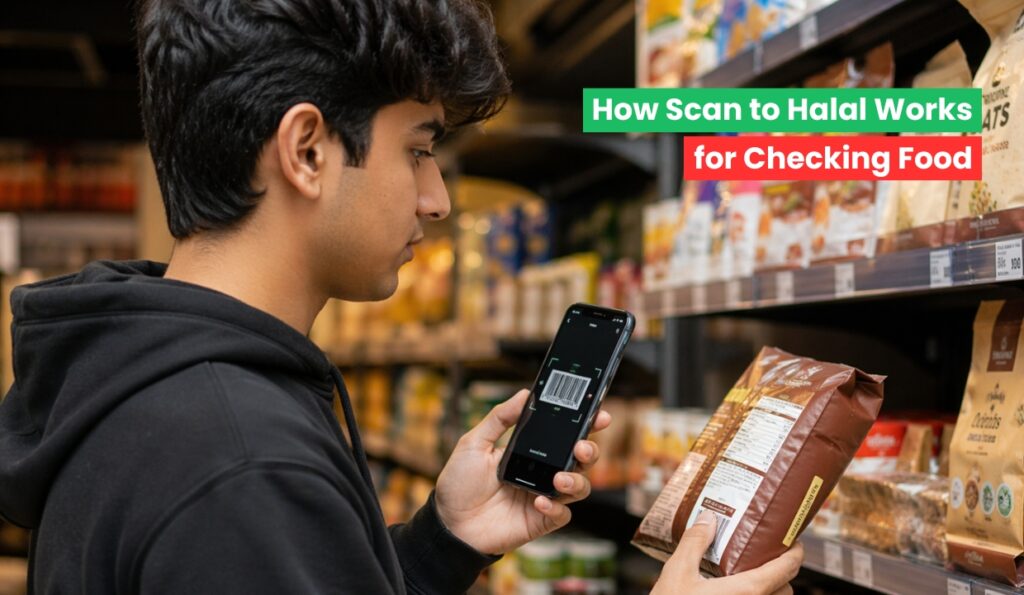
The application operates by letting the users scan the barcode of a food item. The system will scan the product and retrieve information about its ingredients.The components are then examined and displayed in a straightforward format to enable the users to easily know whether the product is halal or has any doubtful components. This would assist in lessening confusion and enhance quick decision making.
Benefits of Using Scan to Halal
- Economizes time in grocery shopping
- Helps are able to detect halal or questionable products quickly
- Makes complex ingredients comprehensible
- Increases awareness of the food content
- Simplifies decision-making and makes it more confident
Limitations of Traditional Methods of Halal Checking
The conventional ways of halal food verification are usually dependent on hand-written reading and study and may be expensive in time and may be perplexing. Names of ingredients are not always easy to decipher particularly where they are presented in scientific notation.Moreover, imported goods can vary in labeling, not every manufacturer can be completely transparent. This complicates the aspect of manual checking by the consumers.
Tips to Ensure You Always Choose Halal Products
In order to guarantee uniformity in the intake of halal products, one should always look out for credible certification marks on the products. It is also important that consumers should shun away any substance whose ingredients are not clear or suspicious and they should use known brands whenever they can. Being educated about popular non-halal additives may also assist in making improved decisions. Better safe than sorry, always check before you eat.
Frequently Asked Questions
How do you know the easiest way to find out whether food is halal?
The easiest way is to check halal certification and carefully read ingredients before consuming a product.
Are all vegetarian foods halal?
Not necessarily, as there are still alcohol-based flavors of some vegetarian products or other non-halal additives.
Why are food ingredients hard to comprehend?
Since most ingredients are written in scientific/chemical names that are not usually familiar.
Do you trust a product with halal certification?
This is normally credible when it is of a trusted authority although checking is essential.
What do I do when I do not know about a product?
When in doubt, it is best to either avoid the product or find out by a credible source.
Conclusion
The issue of food being halal or not is a critical aspect of life to most consumers. Yet, with modern food processing techniques and complicated ingredients, it is not always so simple to make a certain choice.
Although classical techniques such as reading labels and examining certification are also critical, they may be in some cases, confusing and time consuming. This process is now simplified and accessible with modern solutions which assist users in making well-informed decisions in a short time and with confidence.